
The Ha Ha

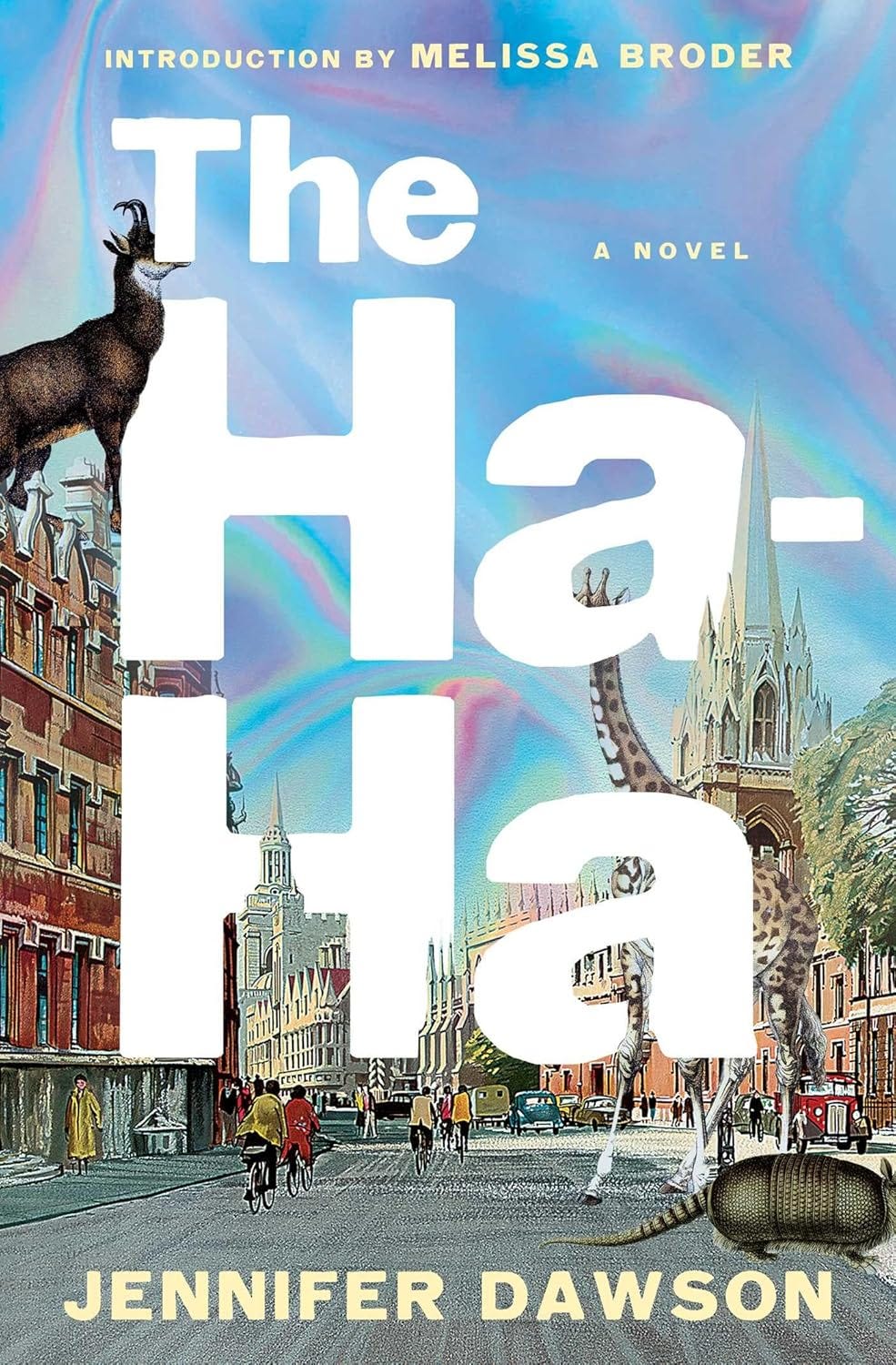
“At a tea party at Oxford University in the 1950s, earnest undergraduates in floral dresses clink cups, discussing their studies, sports, and summer balls. But to one student, Josephine, they are grotesquely transformed: she is sitting among ominous armadillos. Then, the laugher comes. As she is ingulfed in mirthless hysterics, her college has no choice to send her away.”
Jennifer Dawson’s The Ha Ha opens at the moment Josephine “graduates” from the chaotic ground floor of the mental hospital where her college sent her after the tea party to a blessedly quiet single room on the floor above. As small as a cupboard, the room has a narrow bed, a wicker chair—and a window though which Josephine begins to observe and eventually re-enter the real world.
That’s what the nurses and doctors call it: the real world.
A job, a social life, an apartment of her own. Sister, the German nurse overseeing her care, badgers Josephine with questions about her life at Oxford and with devouring compassion persists in imagining a happy future for her that involves, well, becoming like everyone else.
Josephine tries to explain why this is impossible.
“You see, unfortunately…I did not seem able to learn exactly how the appropriate reply fitted on to the prior remark, and a lot seemed to depend on this in undergraduate circles. With me the two never seemed to dovetail.”
I love that so much. Honestly, I feel this way myself a lot of the time. Social occasions are not my forte. But while I feel deeply ill at ease in some settings, I’m not burdened with the dilemma Josephine faced, suffering from schizophrenia which at times made it impossible to know whether what she was seeing, hearing, and experiencing were real.
Given the job of organizing his library, Josephine walks down the hill to house of Retired Colonel Maybury. “If you find it a bit too quiet up here all on your own,” Mrs. Maybury says one day, “do come down into the garden for a bit of sun. I do hope you are liking us.”
Josephine does like them; she loves being surrounded by books in the colonel’s library. But she can’t find the words to respond.
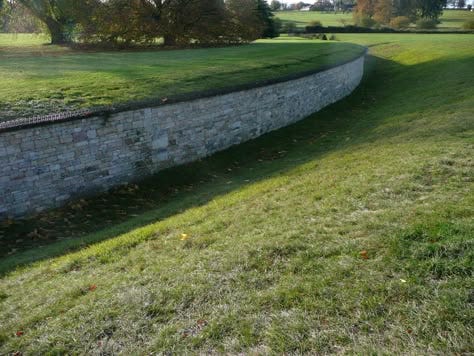
Walking back to the hospital one day, she discovers “a green tunnel between clipped hedges, and at the end, gleaming like an island, the cool gray of the hospital wall.” She passes through it, then drops down into the long grass of ha ha on the other side. It’s so peaceful she begins to spend most of her evenings there.
Enter Alistair, a fellow patient, and they strike up the first friendship Josephine has ever known. He likes her, he gets her. But things go awry when, with Alistair’s encouragement, she attends a party given by an Oxford classmate and her deep unease catapults her “…among the scrubby roots of the tobacco plant, and watching the Parisian gazelle, the Rhodesian spiny mouse, and the diced water snake.”
As her friendship with Alistair intensifies, so does Josephine’s range of emotion and understanding. But her hope for what she begins to see could be a real life for her is countered by greater and more alarming hallucinations.
And as she becomes more “normal,” there is the additional dilemma of sorting out which of her difficulties are due to the illness and which are to be expected in a person her age.
I’ve read a lot about schizophrenia since my granddaughter was diagnosed with the disease several years ago—around the same age as Josephine.
Fiction, nonfiction, memoir. Each writer yielded some piece of the puzzle, but The Ha Ha made me feel schizophrenic. That is, reading the book, I felt like I was constantly trying to figure out what was real, what was not real, and what was partly real (maybe the hardest part).
Okay. I know I can’t really know what it’s like to live with schizophrenia.
Only someone, who experiences schizophrenia, as the author of The Ha Ha did, can know that.
In an interview, Jennifer Dawson described herself as having been a misfit at Oxford herself, a place whose complex and rigid set of rules were completely incomprehensible to her. In her third year, she suffered a psychotic breakdown like Josephine’s and spent six months at the city’s Warneford Hospital—in a Victorian building at the center of a wild meadow, like the hospital in The Ha Ha.
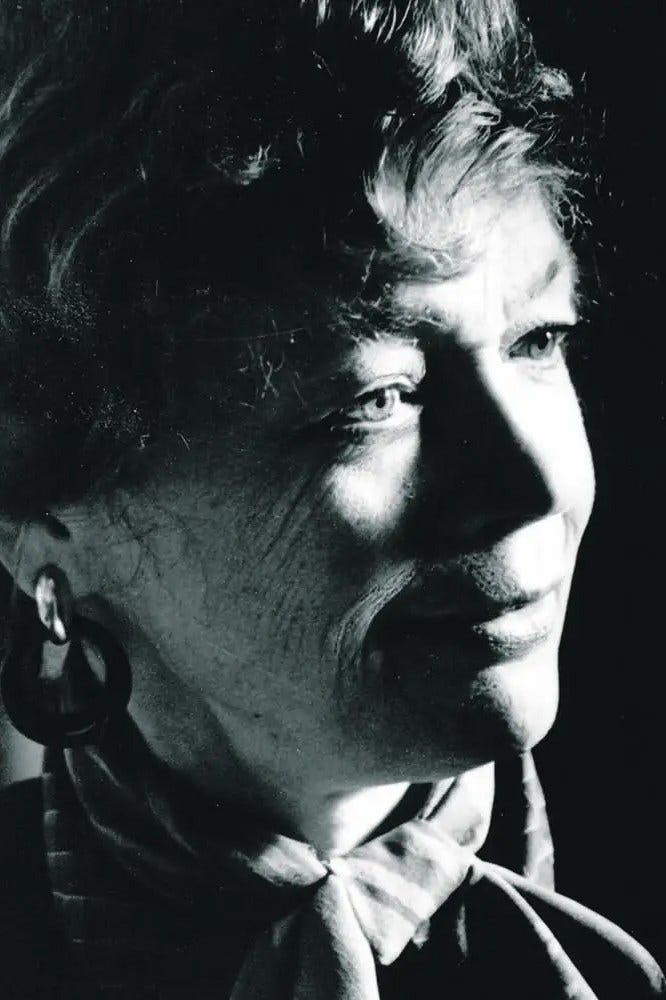
I’m so grateful that that she wrote about this experience and for the insights reading her fictional account of it brought to me.
I’m grateful The Ha Ha was there for me to read, too. Set in the 1950s, the book was published in 1963. Critically acclaimed, it won the James Tait Black Memorial Prize—then disappeared, as too many wonderful books do.
Thanks, Scribner, for republishing this gem.
The Ha Ha also made me think about why I have been an obsessive reader all my life.
When I was young, reading was a kind of magic. I was unhappy in my own world and books not only reassured me that there were other, better worlds beyond my neighborhood, but invited me to live in them for a little while.
Like Josephine, I wasn’t like other kids.
Reading, I didn’t have to figure out how to be. Books provided respite from the exhaustion of, well, being alive.
I still read for that reason.
But over the years, I’ve come to understand that what I love most about reading is the opportunity to live inside someone else’s head, to experience an alien thought process that brings me to different conclusions about the world than I’d have come to otherwise.
Having read The Ha Ha and talking with her about the book, I understand my granddaughter’s world better than I did before—and it is with her permission that I’m writing about her here.
She is a remarkable young woman, curious about the disease she wrestles with and open to sharing all she knows. She’s a straight-A student, soon to receive her degree in Religious Studies.
Plus, she has a wicked sense of humor!
Her goal is to work as a peer counselor for young people in the earliest stages of a psychotic disorder who can benefit from the treatment that set her on her path to recovery.
Did I forget to say that she is also kind and compassionate, that she listens?
Oh, and she’s a wonderful writer, too.
My guess is that she’ll write her own book one day—fiction or nonfiction, who knows?—and that it will be invaluable to others diagnosed with schizophrenia and their loved ones.
I can’t wait to read it!
***
Meanwhile, here are two invaluable resources for anyone seeking help for themselves or for a loved one with schizophrenia:
The Dr. Alan & Diane Breier Prevention and Recovery Center for Early Psychosis (PARC), the full-service program for young people in the earliest stages of a psychotic disorder that set my granddaughter on her own path to recovery and continues to support her.
https://www.eskenazihealth.edu/health-services/brain-center/parc
The Curesz Foundation: Comprehensive Understanding via Research and Education into Schizophrenia, founded by Bethany Yeiser, author of Mind Estranged: My Journey from Schizophrenia and Homelessness to Recovery and Awakenings: Stories of Recovery and Emergence from Schizophrenia
I love this piece, Barb. Jen has worked in peer support, too.
This book sounds fascinating, Barb. I will add it to my list! What a gift it is to be able to read and live in other worlds for a while. Thank you for sharing your recommendation, but also your own story. So glad to hear your amazing granddaughter is doing well. ❤️