
The Renovation
by Kenan Orhan


“I’m six years old and I smoke cigarettes,” has long been high on my list of All-time Favorite First Lines. The student who wrote it, at least thirty years ago, contacted me on Facebook a while back.
“Do you remember me?” she asked.
OMG, yes!” I responded. “Do you remember that fabulous sentence you wrote in my class?”
She did. Better yet, the fact that I was so nuts about that sentence made her think she could be a writer herself—and she became one.
I wish I’d have thought to tell her she’s in good company on my All-time Favorite First Lines List, which includes:
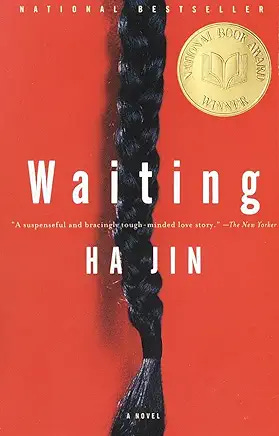
“Every summer Lin Kong returned to Goose Village to divorce his wife, Xhuyu.” From Waiting, by Ha Jim

“I write this sitting in the kitchen sink. That is, my feet are in it; the rest of me is on the draining-board, which I have padded with our dog’s blanket and the tea-cosy“. From I Captured the Castle, by Dodie Smith

“The North Carolina Mutual Life Insurance agent promised to fly from Mercy to the other side of Lake Superior at three o’clock.” From Song of Solomon, by Toni Morrison

“Many years later, as he faced the firing squad, Colonel Aureliano Buendía was to remember that distant afternoon when his father took him to discover ice. From One Hundred Years of Solitude by Gabriel García Márquez.
***
And here’s one I just added to my collection: “I don’t know by what accident the builders had managed it, but instead of a remodeled bathroom attached to my bedroom, they had installed a prison cell.”
It’s from The Renovation by Kenan Orhan, a surreal, disquieting novel that I can’t stop thinking about.
Dilara, the narrator, fled Turkey with her family when her father’s life was threatened under Erdoğan’s brutal regime, and has been living in Italy for several years. A school psychologist in Istanbul, she’s given up trying to find a job in their small village. Her husband, an accountant, works as a mechanic in a local garage; her father, a renowned author and academic, suffers from Alzheimer’s Disease—and has recently come to live with them.
Thus, the need to renovate one of the bathrooms in their apartment.
It’s weird from the get-go. The workmen hang a tarp over the door while they’re at work and change the lock (keeping the key) so Dilara can’t get in when the workday is done.
When the job is finished “…all of the workmen appeared out from under the tarp in a jittery huddle…and dashed off to their next job as if they were Supermans and some poor awaiting kitchen was a plane falling out of the sky.”
Opening the door, she finds a prison cell modeled after Istanbul’s Silivri Prison .
When a guard appears, she asks, “Where am I?
“Are you sick? Silivri Prison,” he responds.
“That’s not right,” Dilara says. “This is supposed to be a waterfall shower with two heads and massaging jets and a marble bench.”
The absurdity of this made me laugh. There’s a lot of it in “The Renovation.”
Dilaria doesn’t tell her husband about this for fear of triggering a bout of his chronic, debilitating anxiety. So, she puts the tarp back in place, tells him it’s going to take a few days longer, and they settle into their usual evening routines.
When she goes into the prison cell the next day, the guard has left her a cup of Turkish coffee that tastes just like the coffee from a café she used to frequent in Istanbul. She takes it to her father, who lifts the cup to his lips, then pouts and raises an eyebrow. When Dilaria takes the cup back, it’s empty—even the grounds have disappeared.
This launches the first of many reflections which, over the course of the novel, tell the story of their lives in Istanbul and what ultimately caused them to flee to Italy.
In the present time, Dilara’s husband freaks out and leaves, her father’s Alzheimer’s symptoms grow worse, and she is increasingly drawn into the world of the prison. She moves some furniture and other belongings into her cell, she begins to communicate with the other women and, one day, the guard unlocks her cell and directs her to join a group of them for their daily exercise.
Generally, I’m not a big fan of magic realism but when it works it’s, well, magical. What makes it work, though?
Here’s what the novelist Luis Alberto Urrea, a master of the form, said when I asked him about magical realism in his stories. “I don’t use it as any kind of device that I’m consciously aware of, but it creeps into my work all the time …There’s a kind of mythic, mad Catholicism [in Hispanic culture] …There’s this world of accepted magic. Our basic faith is of magic; our religion is based on magic.”
Aha, I thought. When it works, magic realism comes from the way you perceive the world. The way the world is for you. It’s not something you can make up.
It so works in The Renovation!
This compelling meditation on immigration, displacement, caretaking, loss—and absurdity not only speaks to the tragedy of Erdoğan’s Turkey but acts as a canary in the coal mine for our own world.
And, oh, that first-line thing.
If you write one, you’d better make sure the reader doesn’t get to the end of the story and feel cheated by its promise.
Keenan Orhan needn’t worry about that!
Click here to read or listen to Scott Simon’s NPR interview with Kenan Orhan. https://www.npr.org/2026/02/14/nx-s1-5613426/in-kenan-orhans-debut-novel-the-renovation-a-hole-in-the-bathroom-tears-open-time-and-space
Love this. Collect great first lines too!
I love first lines, too, Barb. Of course, as you point out, what follows better deliver on what those lines promise.