
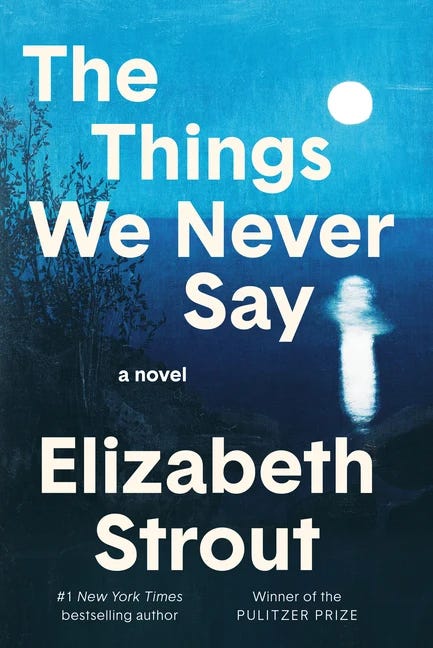
The Things We Never Say
by Elizabeth Strout

Recently, a friend emailed me a video link to Terry Tempest Williams talking about her mother’s journals, with a note: “I can’t get this clip out of my mind.”
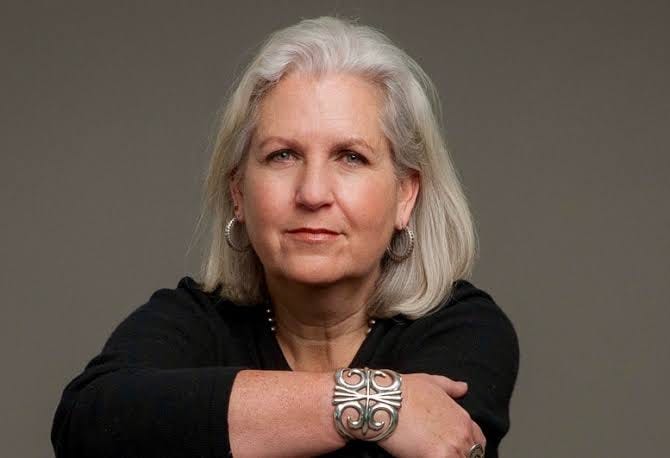
Once I watched it, I couldn’t keep it out of my mind either.
The journals were bequeathed to Williams, with explicit nstructions on where to find them, and upon her mother’s death she found three full shelves of them, “each one beautifully individual—leather, fabric, painted.”
Every single one of them empty.
Williams wonders why—
“Was she saying, ‘’‘Please write?”
“Was she saying, ‘The two things the Mormon Church asks of women are to have children and keep a journal’ and this was her rebellion?”
“Was she living so fully she didn’t have time to write?”
My friend weighed in.“If it were not for the two basics for women of Mormon religion: to have children and to keep a journal, I would think it just black hole sad she took such care to create these books but never recorded in them. But I see it now as her rebellion.”
I so hope she’s right.
In any case, the clip made me think Elizabeth Strout’s novel The Things We Never Say. It’s the story of Artie Dam, an eccentric, tender-hearted high school teacher in a small coastal Massachusetts town. He loves teaching, loves his wife and son, loves taking his sailboat out solo on sunny days. He is well-loved by almost everyone he knows.
But recently, he feels detached and lonely, he revisits painful memories, he ponders how to commit suicide and make it seem like accident—all of which he keeps to himself.
A decade-old tragedy sits at the center of his troubles. The summer before leaving for college, his only son survived a car accident that killed his girlfriend, causing him to turn inward and creating an unspoken distance between Artie and his wife.
There’s a secret, too—which when revealed shatters Artie’s understanding of his life.
Despair about the state of America under our never named but clearly recognizable president is also in the mix.
By way of Artie’s existential crisis, The Things We Never Say considers questions many do their best to avoid—
What keeps us from telling the whole truth of our lives to those we love?
When is it kinder not to tell the truth?
When is telling or not telling the truth a form of cruelty or revenge?
What is the point in telling the truth if the person to whom you tell it won’t “get it” anyway?
How might telling the truth wreak havoc in your (or someone else’s) life?
How might not telling the truth wreak havoc in your (someone else’s) life?
When are you obligated to tell (or not to tell) the truth, no matter what?
And this: Do we really have free will?
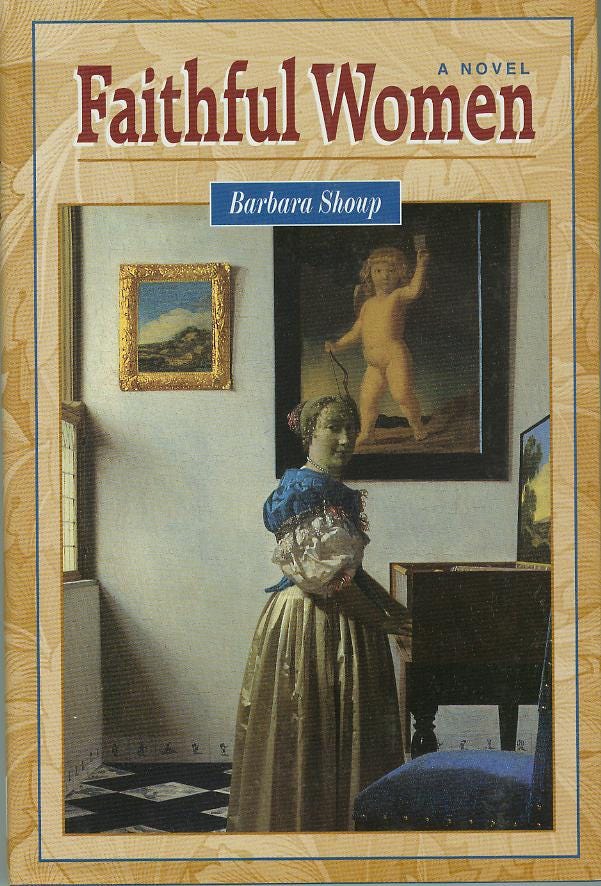
There’s an archaeologist in my novel, Faithful Women, and asked about his passion for the dig, he responds, “Because one small discovery could change…everything.”
One new piece of information can change everything in life, too.
And one new piece of information changes Artie’s, shattering his understanding of the world he thought he knew.
In my favorite moment in the book, he observes, “…Because to say anything real was to say things that nobody wanted to know. Or if they wanted to know, they would not care in the right way. Or even understand. It was a private thing, to be alive.”
To say more about the plot of The Things We Never Say would spoil it for those of you yet to read it.
But I will say the book has stuck in my mind like the image of that row of Terry Tempest Williams’ mother’s empty journals.

Love this line in particular:What keeps us from telling the whole truth of our lives to those we love?
I’ll be thinking about it the rest of the week. There’s something about it that hints at the general unhappy so many of us carry.
Cool.