
When the War Is Over

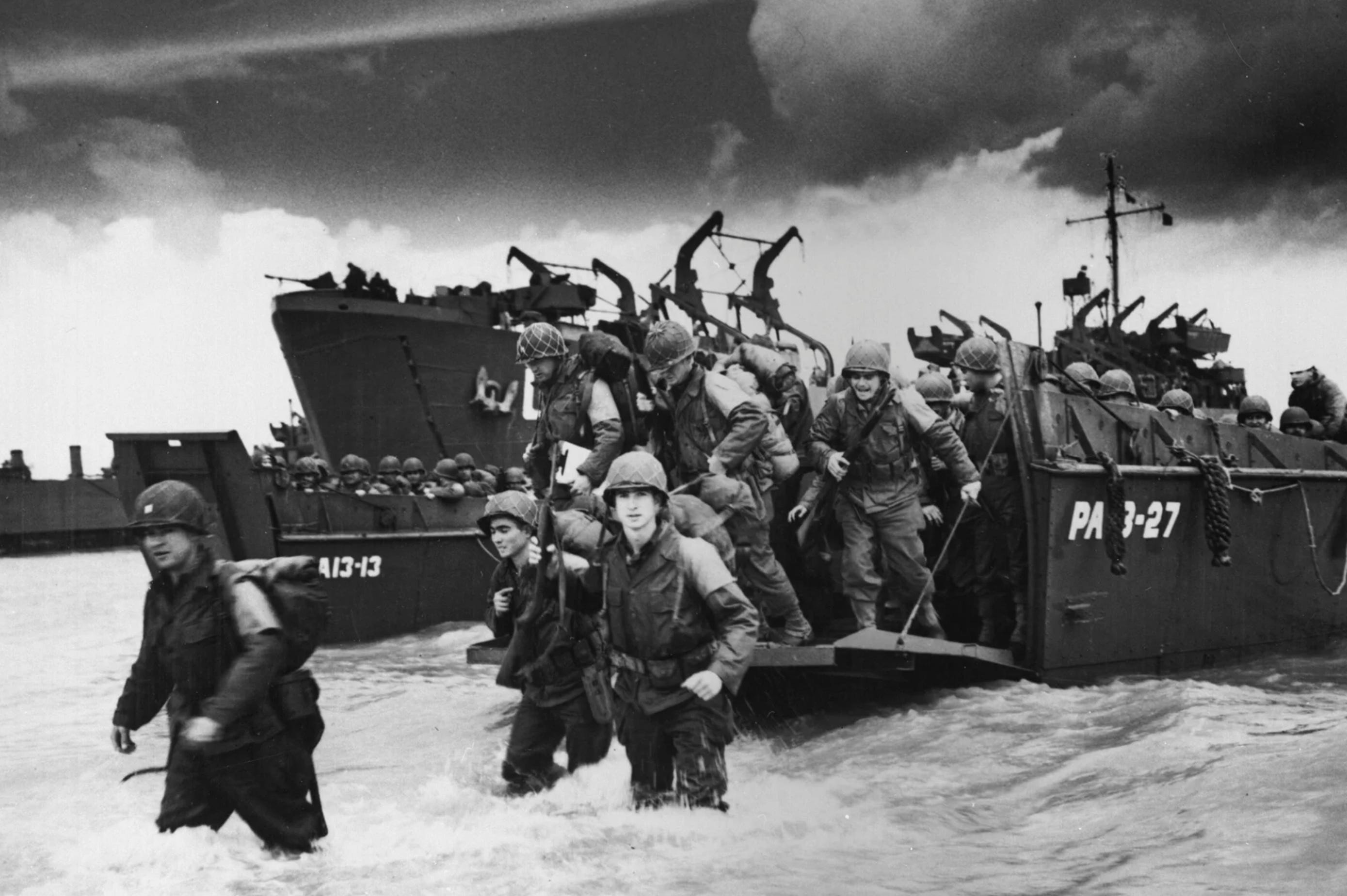
My parents met and fell in love at the Golden Lion Pub in Newmarket during World War II—my dad an American GI, my mom in the Women’s Royal Air Force. It’s D-Day today, news and social media full of stories and photographs from that fateful day.
One of the many things I love about travel is the new, visceral understanding of an historical event that that can occur when you stand in the place it happened. Standing on one of the Normandy beaches some years back, I was horrified at how narrow it was, how quickly the soldiers coming off the landing crafts would have come up against steep cliffs with nowhere to go as Germans shot at them from above.
But what I’m thinking about on this D-Day is how I’m pretty sure the War was happiest time in my parents’ lives. My dad (who never saw combat) was a master sergeant, in charge of supplies; my mom was a radio operator. When he was on leave, he came to Newmarket on a troop transport truck with a bunch of other GI’s; my mom and her pals rode the WRAF communal bikes to the pub.
He (I learned at forty) had married on the spur of the moment (and unwisely) before shipping out; my mom had grown up with very strict parents and suddenly found herself (wahoo!) free to do whatever she pleased. She was a competition ballroom dancer before the war (also something I learned well into my adulthood) and evenings at the Golden Lion Pub were all about dancing.
Count Basie, Glenn Miller, Duke Ellington, Artie Shaw.
The Dorsey Brothers, the Andrews Sisters.
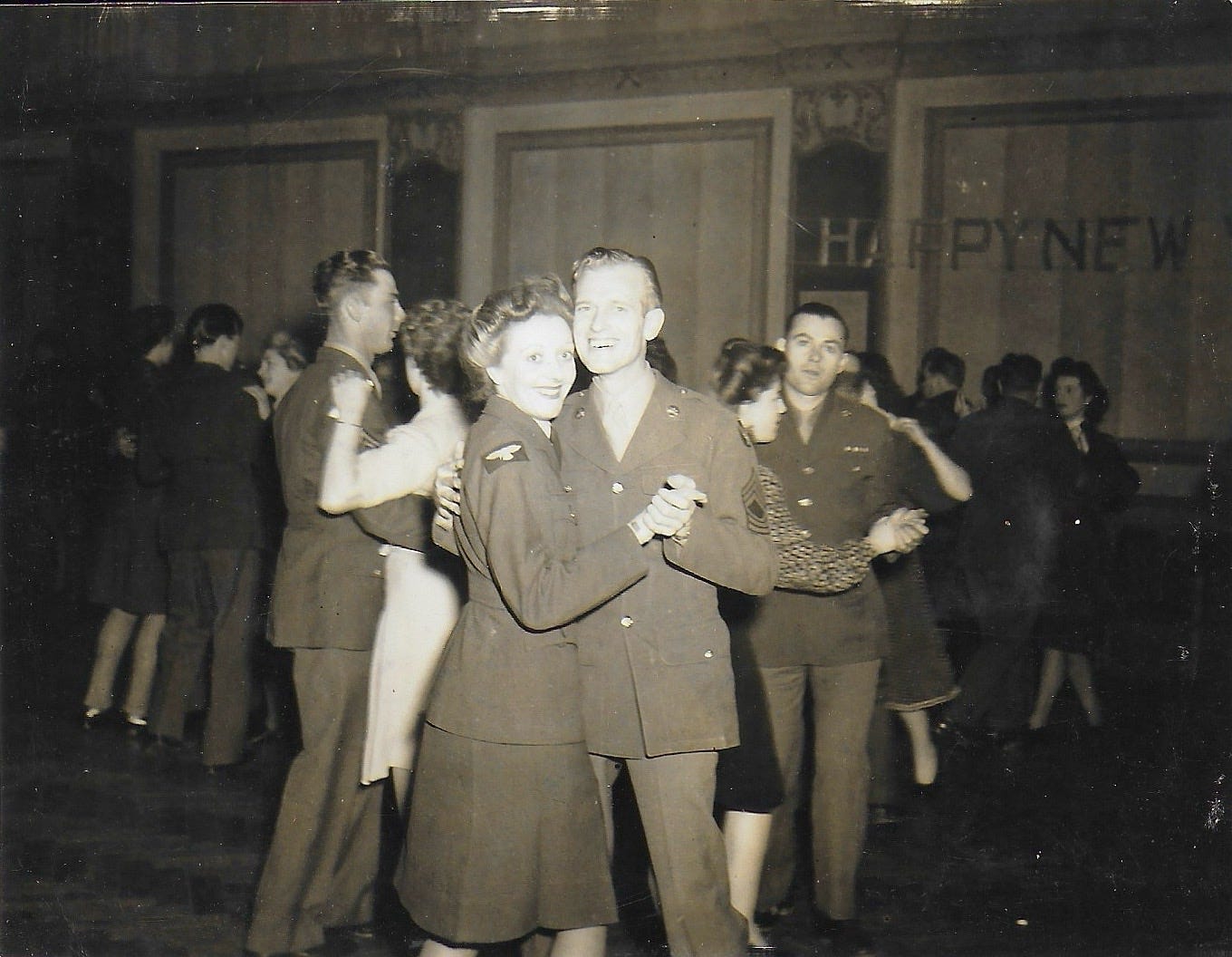
I was fascinated (still am) by this time in their lives and have explored it in fiction twice.
Once in Faithful Women—
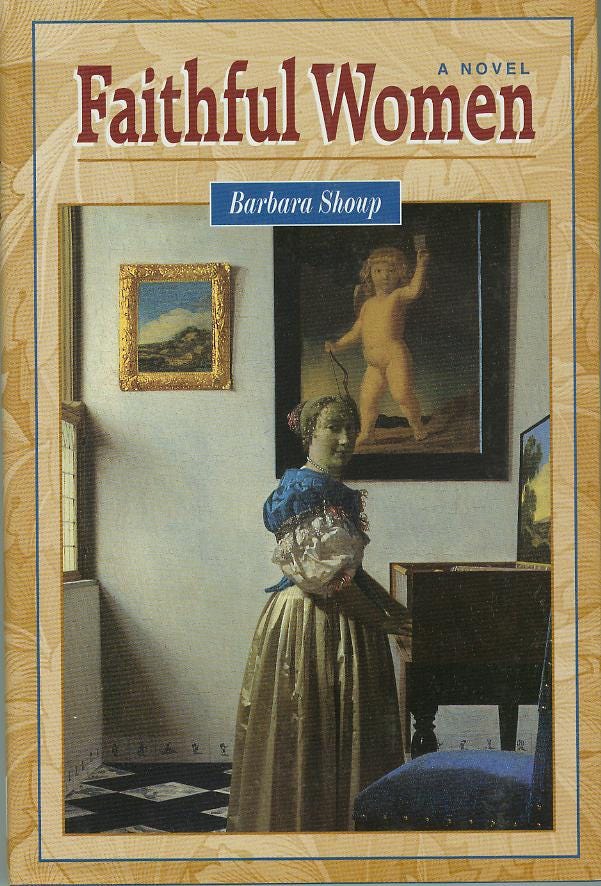
Evie Slade has long ago put her unhappy childhood behind her and created a quiet, solitary life for herself as a conservator specializing in the art of seventeenth-century Holland.
Now middle-aged and vaguely discontented with her life, Evie gladly accepts a commission to repair a slashed Vermeer at the National Gallery in London. She anticipates being energized by the change of scene and returning to her old life renewed; instead, being in England sends her reeling backward to confront the bitterness and resentment she feels toward her English stepmother, whom her father met and fell in love with during World War II.
The action of the novel unfolds beneath the gaze of Vermeer’s “A Lady Standing at the Virginal,” whose ever-growing presence in Evie’s life heightens her own sense of discovery about herself and her family.
The fictional version of my parents’ romance in Faithful Women is different from what actually happened in some fundamental ways; for one thing, the fictional characters meet on a train. Still, on a research trip to England, I couldn’t resist going in search of the Golden Lion Pub.
It was still there! And standing in the dark, cozy pub where my parents fell in love, a visceral piece of my own history fell into place.

All of which is to say, I guess, that the War was so many different things.
Not to mention its profound repercussions in the lives of people who weren’t even born at the time.
Like myself.
I wouldn’t be here but for World War II; I’m still wrestling with secrets and untold stories about it that shaped my childhood and in so many ways made me who I am.
Thank God for writing fiction, which allows me to go at my life “sideways” and, when I’m lucky, find a place for some of the confusion and sorrow rooted in that time before I was born.
Recently, I finished When the War Is Over, another novel hinging on World War II—and more closely related to my life.
Thirteen-year-old Margaret Whitmore’s American father and British mother met during World War II and she’s grown up believing in a romantic fantasy of their love story. She’s thrilled when her English Aunt Ivy and her toddler son come to live with her family for a while, hungry for the stories Ivy tells about England and the war. But those stories make Margaret’s mother anxious, creating tension between the sisters; Ivy’s immaturity and selfishness create stress on the family finances, threatening Margaret’s father’s sobriety. And the secrets she reveals to Margaret complicate Margaret’s already unhappy life in post-war suburbia as she navigates school, friendships and a growing fear that her dad has begun drinking again.
My English aunt and her toddler son did come to stay with my family when I was thirteen.
She was immature and selfish and created a terrific amount of tension.
This escalated my dad’s drinking.
I was every bit as unhappy as my character, Margaret.
I was heartbroken by a friend who dumped me, as Margaret was.
Margaret’s story turned out to be quite different from my own. But writing it made me feel more compassionate toward my aunt who had been young and lost—and for my young, wounded self.
Well. I have certainly departed from D-Day, haven’t I?
However, both D-Day and my novel share this truth:
“Only the dead have seen the end of war.” George Santayana
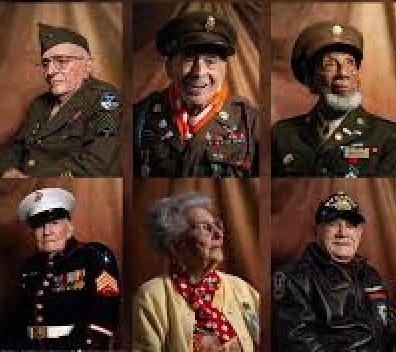
Googling, I was astonished to find that an estimated 30,000 D-Day veterans are still living—by now, in their 90s or older.
I wonder what they’re thinking today.
What they remember, what they wish they could forget.
www.barbarashoup.com
This is a lovely post and congratulations on the new novel!! 🌟
Thank you for sharing the story of your parents... and so many others.